
To be honest, my relationship with AI video generators has been a bit of a love-hate situation. I love the magic of typing a prompt and seeing a world come to life. But I hate the glitches—the morphing faces, the weird artifacts, and the frustration of trying to crop a widescreen video for TikTok only to lose the most important part of the shot.
If you are a creator like me, you know exactly what I’m talking about.
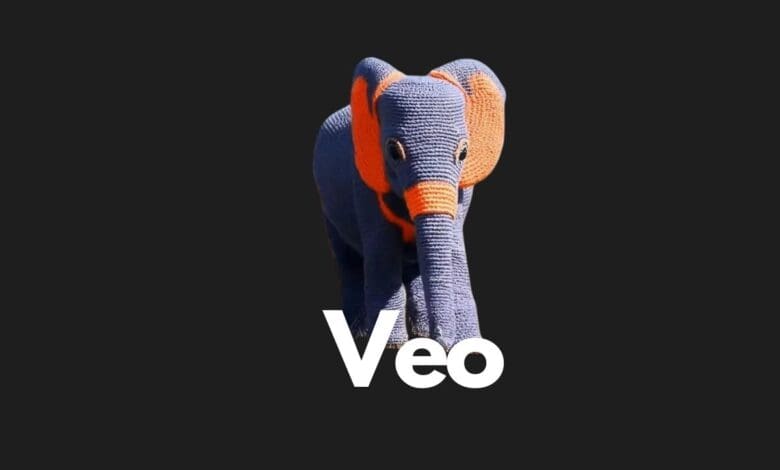
But today, Google might have just solved my biggest headaches. They just dropped Veo 3.1, and let me tell you, this isn’t just a minor patch. It’s a complete overhaul focused on two things we desperately needed: Vertical Video and Consistency.
I’ve been digging into the release notes and the demos, and here is why I think this update is a pivotal moment for AI filmmaking.
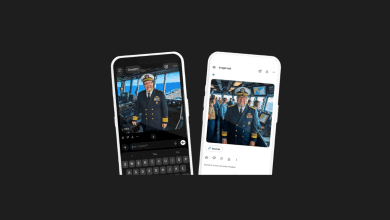
Finally! Native Vertical Video (9:16)

For the last year, whenever I generated an AI video, it was almost always in a cinematic 16:9 aspect ratio. That looks great on a monitor, but it’s terrible for the phone screen. I’d spend hours trying to reframe shots for Instagram Reels or YouTube Shorts, often ruining the composition.
Veo 3.1 changes the game by supporting native vertical generation.


This means the AI understands the vertical frame from the start. It composes the shot for a smartphone screen, ensuring your subject is centered and the action happens where people can actually see it.
- No more cropping: You get full resolution in 9:16.
- Direct Integration: Google is putting this straight into YouTube Shorts and the YouTube Create app.
- Gemini Access: You can play with this directly inside the Gemini app.
From my perspective, this is Google flexing its ecosystem muscle. By putting this tool right where creators live (YouTube), they are lowering the barrier to entry massively.
The Holy Grail: Character & Object Consistency
This is the part that got me the most excited. The biggest problem with AI video has always been hallucination. You generate a character in one shot, and in the next shot, they look like a completely different person. Their clothes change, their face warps—it breaks the immersion.
Google claims Veo 3.1 has cracked the code on Reference Image Consistency.
Here is how it works: You upload a reference image of a character or an object, and the model understands that this specific thing needs to stay the same across different generated clips.
What does this mean for us?
- True Storytelling: We can finally make coherent short films where the protagonist looks the same in Scene A and Scene B.
- Asset Reusability: You can use the same background texture or prop across multiple videos.
- Natural Movement: The update reportedly improves facial expressions and body language, making characters feel less like robots and more like actors.
I haven’t tested the limits of this yet, but if it works as well as the demos show, we are moving from “cool tech demos” to “actual movie production.”
4K Resolution: Going Pro
Let’s talk about quality. Until recently, most AI video was a blurry mess, barely passable at 720p.
Veo 3.1 introduces 1080p and 4K upscaling support.
This is crucial. If you are a professional editor or working on a high-end project, you can’t use low-res footage. By offering 4K, Google is signaling that Veo isn’t just a toy for memes; it’s a tool for production houses.
However, there is a catch. It seems the high-end 4K features are primarily being rolled out via Vertex AI and the Gemini API. This targets developers and enterprise users first, but it will inevitably trickle down to the rest of us.
Why This Matters (My Take)
I’ve been watching the AI video wars closely—Sora, Runway, Kling, and now Veo.
What makes Veo 3.1 interesting to me isn’t just the raw power; it’s the workflow. Google understands that a cool video is useless if you can’t control the story. By focusing on consistency and vertical formats, they are solving the actual pain points of creators, not just showing off research.
We are entering an era where your “camera” is just a text box, and your “actors” are generated from a single photo. It’s terrifying, exciting, and absolutely fascinating all at once.
Final Thoughts
The gap between “imagining” a scene and “seeing” it on a screen is closing faster than I ever predicted. Veo 3.1 proves that 2026 is going to be the year of AI Storytelling, not just AI clips.
I’m planning to test this out on my next YouTube Short to see if the vertical generation holds up to the hype.
I want to ask you: As these tools get better at mimicking reality and keeping characters consistent, do you think we will see the first fully AI-generated blockbuster movie this year, or are we still years away from that?
Let me know your predictions in the comments!
You Might Also Like;